
Zapotec Tomb Discovery Hailed As Mexico’s Most Significant Archaeological Find In A Decade
For over 1,400 years, this tomb remained hidden beneath the ground in southern Mexico—sealed, silent, and untouched. At its entrance stood a stone owl, a symbol of death, watching over a mysterious face carved beneath its beak. What archaeologists found inside wasn’t just a burial, but a powerful message left behind by the ancient Zapotec civilization.
Stay with us to uncover what this discovery reveals about ritual, power, and the way the ancient world understood death.
And don’t forget to subscribe to Ancientra, hit the like button, and turn on notifications so you don’t miss our daily stories, discoveries, and historic events.
Mexico’s government and the National Institute of Anthropology and History (INAH) have announced a remarkably well-preserved Zapotec tomb dating to around AD 600, a discovery officials describe as the country’s most important archaeological find of the past decade. Its exceptional condition and surviving artwork offer a rare opportunity to understand Zapotec ritual life, social hierarchy, and beliefs about death.
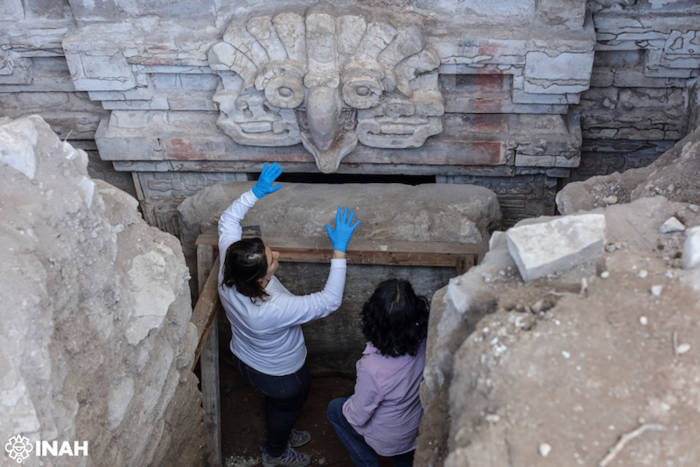
The tomb was uncovered in Oaxaca’s Central Valleys, within the municipality of San Pablo Huitzo, after INAH responded to a report of looting. The discovery highlights how fragile archaeological heritage remains, and how quickly action is required once a site is threatened.
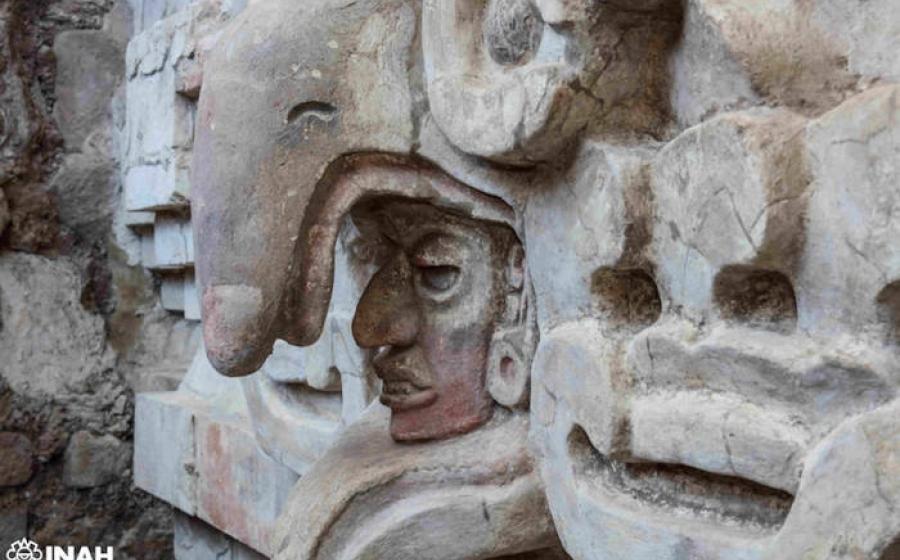
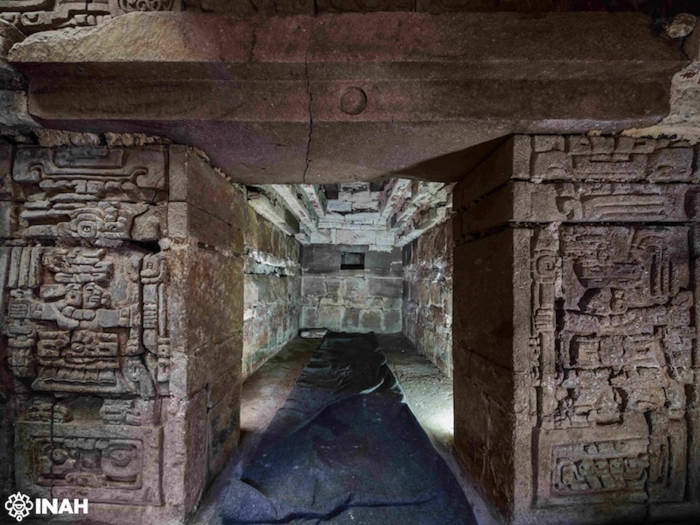
According to INAH, the tomb consists of an antechamber and a burial chamber, both richly decorated with carved stone and painted elements. The most striking feature appears at the entrance: a large owl, an animal linked in Zapotec belief to night and death.
The owl’s beak curves over a painted stucco face believed to represent a Zapotec lord, possibly an ancestral figure connected to the tomb’s function and later veneration. This visual pairing immediately signals that the structure was not merely a burial space, but a place designed to convey power, memory, and sacred meaning.
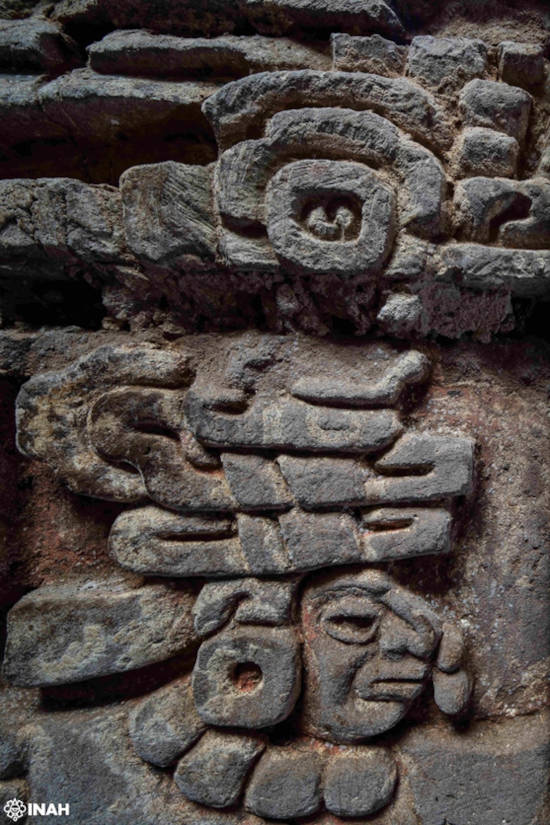
This emphasis on ancestry is especially significant in Oaxaca, where elite burials were closely tied to authority, legitimacy, and communication with the divine. The tomb’s imagery suggests it was intended to be seen, approached, and remembered, functioning as a visual statement of status and belief rather than a purely functional resting place.
Inside the burial chamber, INAH reports the survival of mural paintings still in situ, a rare condition since murals are often the first elements to deteriorate once a sealed tomb is exposed. The preserved paintings feature a polychrome palette of ochre, white, green, red, and blue, and depict a procession of figures carrying bags of copal, a resin commonly used as incense in ritual practices.
According to Heritage Daily, the extent of preservation allows researchers to refine current understanding of Zapotec social organization, funerary customs, and cosmological concepts during the Classic period. Because so much of the decorative program remains intact, the tomb offers unusually direct insight into how these ideas were visually expressed.
INAH states that an interdisciplinary team from Centro INAH Oaxaca is currently engaged in conservation, protection, and research efforts. These include stabilizing the murals, which are threatened by roots, insects, and sudden environmental changes that can quickly damage exposed paint surfaces.
Alongside conservation work, specialists are carrying out ceramic, iconographic, epigraphic, and physical anthropology studies to better understand who was buried in the tomb, how the burial was conducted, and what the imagery represented to the community that created it. Each line of research contributes to reconstructing the social and ritual context in which the tomb was used.
The ongoing studies aim to clarify the role of the individual or individuals interred there, as well as the symbolic language employed in the sculpted and painted elements. By examining materials, artistic choices, and spatial organization, researchers hope to determine how the tomb functioned within broader Zapotec traditions of memory and power.
In Oaxaca, discoveries of this kind resonate with wider Zapotec mortuary practices known from monumental centers and long-established “cities of the dead” across the region. Such tombs were not conceived solely as final resting places, but as enduring spaces where history, religion, and political identity were made visible.
The San Pablo Huitzo tomb reinforces this perspective, showing how burial architecture and imagery worked together to preserve lineage, assert authority, and connect the living with the ancestral and divine realms. Its survival allows these intentions to be read with unusual clarity, offering a rare and valuable glimpse into a complex ritual world that once shaped Zapotec society.
The discovery also underscores the importance of rapid intervention in protecting cultural heritage. The tomb’s survival was made possible because authorities responded quickly to reports of looting, preventing further damage and loss of information that could never be recovered once disturbed.
INAH emphasizes that work at the site remains ongoing, with conservation and research proceeding carefully to preserve what has endured for more than a millennium. The fragile murals, stone carvings, and architectural features require constant monitoring as specialists work to mitigate the effects of exposure after centuries of isolation.
As research continues, the tomb is expected to contribute significantly to scholarly understanding of Zapotec society during the Classic period. Its imagery, materials, and layout provide direct evidence of how death, ancestry, and authority were intertwined, and how these concepts were communicated visually to the living.
In the broader context of Oaxaca’s archaeological landscape, the San Pablo Huitzo tomb stands as a powerful reminder that burial spaces were active participants in social and religious life. They were places where identity was reinforced, memory was shaped, and belief was made tangible.
Preserved with extraordinary clarity, this tomb offers a rare window into a world where art, ritual, and power converged beneath the earth—waiting centuries to be seen again.
Thank you for watching. We hope you enjoyed uncovering this incredible archaeological discovery and the secrets it preserved for centuries.
If you found this story fascinating, please support the channel by liking the video, sharing it, and subscribing to Ancientra for more compelling stories, discoveries, and historical events—every day.
We’ll see you in the next story.
for the video
For more than 1,400 years, this ancient tomb remained sealed beneath the ground of southern Mexico, untouched by time and forgotten by the modern world. When archaeologists finally uncovered it, they were met by a chilling sight: a stone owl guarding the entrance, its beak hovering over a human face frozen in plaster. Inside lay rare murals, ritual symbols, and clues to a civilization’s beliefs about death, power, and the afterlife. This was not just a burial—it was a message meant to last forever. What they found inside is now changing what we know about the ancient Zapotec world.
🏷️ TAGS (≈100 words)
Zapotec tomb, ancient Zapotec civilization, Mexico archaeology, archaeological discoveries, ancient tomb discovery, INAH Mexico, Oaxaca archaeology, ancient murals, pre-Columbian Mexico, Mesoamerican history, lost civilizations, ancient rituals, burial chambers, ancient symbols, owl symbolism, death rituals, Classic period Mesoamerica, ancient art, preserved tomb, hidden history, ancient beliefs, archaeological mystery, ancient Mexico secrets, historic discoveries, archaeology documentary, ancient cultures, anthropology, ancient civilizations explained, forgotten civilizations
#️⃣ HASHTAGS
#Archaeology #AncientHistory #Zapotec #AncientMexico #LostCivilizations #ArchaeologicalDiscovery #HiddenHistory #AncientTombs #Mesoamerica #HistoryUncovered #AncientArt #HistoryDocumentary
title
Zapotec Tomb Discovery Hailed As Mexico’s Most Significant Archaeological Find In A Decade


Aucun commentaire: